Recruiting for Good: Uplifting Mission-Aligned Organizations
By reflecting the demographics of the communities they serve, supporting diversity, and taking a hard look at board governance, nonprofits can not only identify and recruit their next great leader but also uplift the organization for a long-term, sustainable, and impactful future.
Read More
Your Pipeline to the C-Suite Starts Here
In the fast-paced world of corporate leadership, the journey to the coveted C-suite begins long before talented individuals reach the executive level. This article is designed to highlight the pivotal role that a well-structured talent pipeline plays in developing strong and diverse leadership. As we navigate the challenging landscape of talent acquisition and retention, it becomes apparent that embracing a philosophy and culture that prioritize pipeline development strategies is not merely a choice but a necessity.
Read More
Must-have Onboarding Elements for New Employees
Whether you’ve secured locally-based talent or hired from afar and are supporting a relocation, remember that starting a new chapter at any level of one’s career is both exciting and stressful. This is also true of those at the executive level! A new door has opened, and investing the proper time and effort to create a comprehensive onboarding experience will make the journey as smooth as possible for your new employee, whether they are mid-career or joining the c-suite. More importantly, this process is crucial to their success and longevity at your organization. Effective relocation and onboarding programs are powerful employee retention tools that deserve maximum attention.
Read More
Eight Steps to Enhance the Candidate Experience
Trying to attract top talent to your organization? Great, so is everyone else! That’s why a competitive salary and attractive benefits package is so important, but it’s just a start. Creating a positive experience for candidates is an often overlooked — and underutilized component — of the executive search process. Just like organizations are interviewing candidates, those same candidates are simultaneously interviewing the organization to see if it’s a good fit for them from both a career and cultural perspective.
Read More
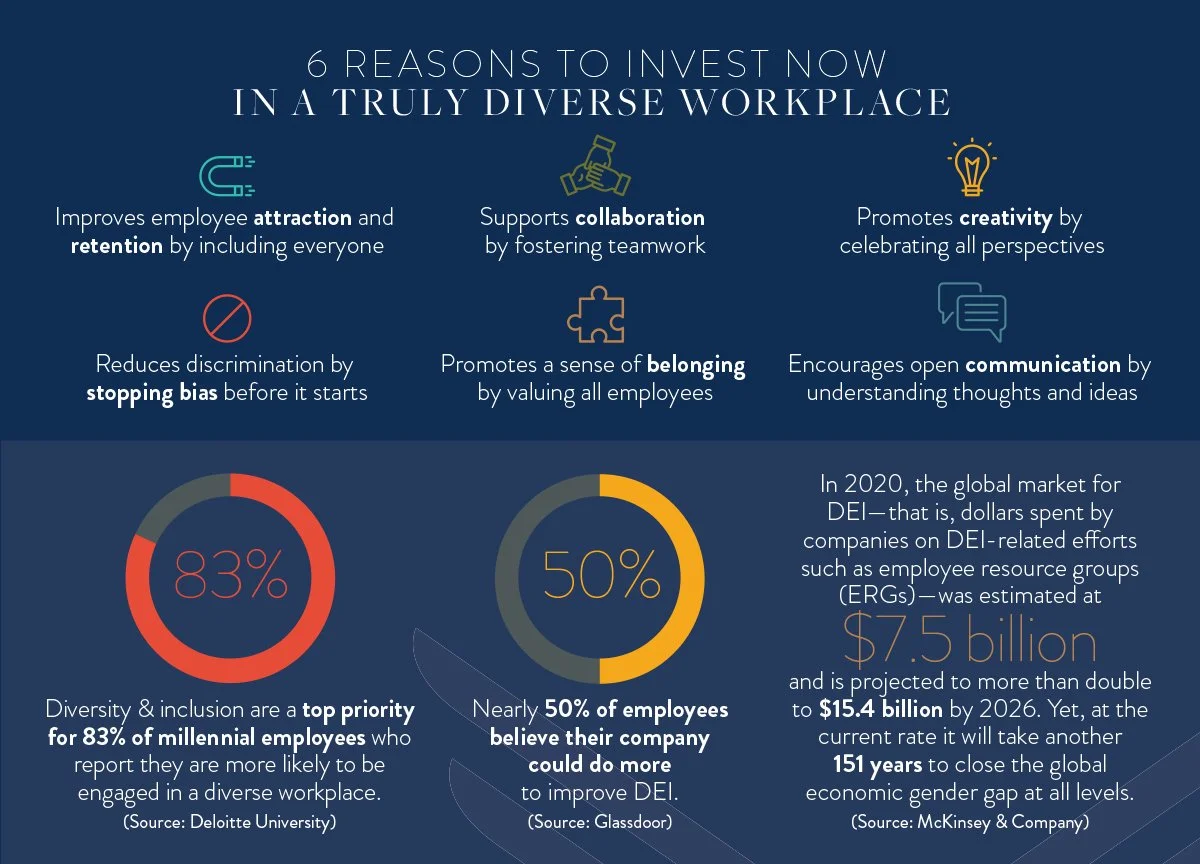
Six Reasons to Invest now in a Truly Diverse Workplace
Diversity, equity, and inclusion are intrinsic to building effective teamwork and collaboration within any organization. By prioritizing these principles, organizations can harness the full potential of their teams, resulting in improved problem-solving, decision-making, and overall organizational success.
Read More
Replacing a Long-Tenured Leader? Do this, not that.
Replacing a long-tenured leader or founder in a non-profit organization can be a challenging task for any Board of Directors. It’s a topic we’ve already touched upon here, but is important enough that we’re digging in deeper. That’s because most favorable outcomes occur when a Board keeps the best interests of the organization’s current and future strategic direction in mind.
Read More
Search Committee Best Practices: Setting up for Success
By their very nature, Search Committees are both varied and imperfect. They span companies, industries and continents, bringing together individuals from across an organization to share the recruitment and hiring process. Even if they understand the main goal — conducting a search for the organization’s next best leader — it’s easy for these committees to stray off-task or get bogged down in minutia, slowing down what could be an otherwise well-proven process.
Read More
A Brave New World: Shrinking Leadership Tenures
Like it or not, there’s a new leadership reality coming. The post-pandemic period has brought permanent changes and challenges to the U.S. workforce, including condensed CEO leadership tenures. For boards and executive leadership teams, the time to prepare is now.
Baby Boomers, those born between 1946 and 1964, continue to retire in record numbers. They are being replaced by talented, energetic, innovative and dynamic X-Gens (born 1965-1980) and experienced Millennials (born 1981-1996).
Read More
The Most Vital Component of Any Search Process
In the world of executive search, most searches conclude with a finalist candidate accepting a search firm-mediated client offer that establishes the agreed upon financial terms, start date and on-boarding initiative — important items to any new leader. However, many are surprised to hear that a search firm’s engagement with both client and candidate doesn’t have to end with placement. In fact, post-placement consultation and follow-up is perhaps the most important part of our firm’s search process.
Read More
Best Practices for Replacing a Long-tenured, Non-Profit CEO
As a search firm, we repeatedly encounter the following scene: A frantic Board Chair or Search Committee member calls because their esteemed founder and long-tenured leader (LTL) has decided to retire. The organization has no succession plan or otherwise strong internal candidates so they must engage a search firm.
It is never easy to replace a founder or otherwise LTL. This is typically someone who many consider a legend, a leader with a distinguished career, remarkable body of work and legacy of profound impact. Accordingly, boards of directors must navigate a sometimes unenviable duality that includes exiting the retiring CEO with grace, professionalism and respect, while partnering with the search firm to recruit the right leader at this stage of the organization’s life cycle. The process requires empathy, inclusivity, transparency, common sense and foresight.
Read More
The Case for “Strong #2’s” as CEO Candidates
When our clients lack internal bench strength and succession planning does not deliver, they retain executive search firms to recruit the organization’s next leader. Whether it’s a CEO, Executive Director or President role (hereafter referred to as CEO), organizations tend to be favorably disposed towards sitting CEO’s, current #1’s. While this may be a safe and traditional strategy for attracting and recruiting their next leader, we advise and firmly believe that our clients are best served by also engaging and giving serious consideration to “strong #2’s.”
Read More
Why Your Board Needs a Succession Plan Now
In the past 20 months, we have seen a trifecta of reasons why boards can no longer delay succession planning. For starters, the pandemic has worn out senior leaders mentally, forcing many to retire earlier than they may have originally conceived. In addition, the racial reckoning of 2020 post George Floyd’s murder has forced boards to ressess and reevaluate whether or not their leadership truly reflects and embodies the communities they serve. Lastly, the best and brightest of the XGens and experienced millennials need to be engaged as future leaders or you will lose them to the current candidate market.
Read More
Designing Fast, Efficient Searches to Meet Demand for DEI Talent
Since May of 2020, we have observed a marked increase in diverse board appointments as well as mandates for searches that deliver not only a diverse candidate pool but also a diverse candidate placement outcome. Our clients are doubling down on this trend because they are motivated and driven to re-establish trust within the communities they serve by placing executive leadership that is representative of its demographics.
Read More
Why HR & Talent Management Functions are More Important than Ever
When it comes to executive search, firms across the country have at least one catalyst for staying busy: organizations do not protect all of their STARS. Most often, the candidates we find to fill new client positions are passive. These professionals are reasonably happy at their current employer, but their Highest Career Goals & Aspirations (HCGA) reach above and beyond their current position. Executive leaders are willing to take our calls and listen to our client value proposition when they hear that our client’s role fits their ambitions.
Read More
Top 3 COVID-19 Lessons all Leaders Should Adopt Now
From culture and talent management to health and wellness, the COVID-19 pandemic has spotlighted several valuable lessons for organizational leaders to carry with them going forward. With many organizations maintaining a fully remote environment and others adopting a hybrid approach, the employer playing field as we knew it has changed. By letting go of old-school beliefs and embracing transformation, the savvy leader can enjoy increased productivity while creating a healthier work environment with happier employees.
Read More
A Crucial Link: Succession Planning & Emerging Leader Retention
All too often, especially in organizations with long-tenured leaders (including founder-led), the leader’s focus tends to be on themselves rather than on the organization’s succession plan. Unfortunately, when succession planning takes a back seat, often so does emerging leader retention. Thus, there is a direct correlation between succession planning and employee retention and although this correlation has always existed, the effects of the COVID-19 pandemic have only exacerbated it.
Read More
Steps to Enhance Onsite Candidate Interviews for AHE & NPOs
Affordable Housing entities (AHE) and Non-Profit Organizations (NPO) boards members, senior staff and executive leadership all desire efficient and effective interview processes for obvious reasons. Unfortunately however, they are rarely prepared. Why is that? Let’s explore common obstacles as well as steps for improving the process for both interviewers and candidates.
Read More
Identifying and Transforming SMEs into Effective Leaders
As executive search professionals, we are asked to behaviorally interview interested and qualified candidates against a set of criteria commonly referred to as “The 5 Must Haves.” These include the knowledge, skills, abilities, attributes, and accomplishments that our clients deem most critical to successful first year and beyond performance. In this lineup, you will most certainly find functional Subject Matter Experts (SMEs). While important, these individuals and their skillsets are not what separates the contenders from the pretenders. In fact, what differentiates one candidate from another is their demonstrated leadership, interpersonal skill, cultural fit, and overall alignment with the organization. In essence, SME is not necessarily a synonym for “exceptional leader.”
Read More